

-85x85.jpg "Baby care Combo Offer")
.png)
.jpg)
.jpg)
-633x450.jpg "25% OFF")
-633x450.jpg "Big Discount")
-633x450.jpg "Flat 33% Off")
Latest Blogs
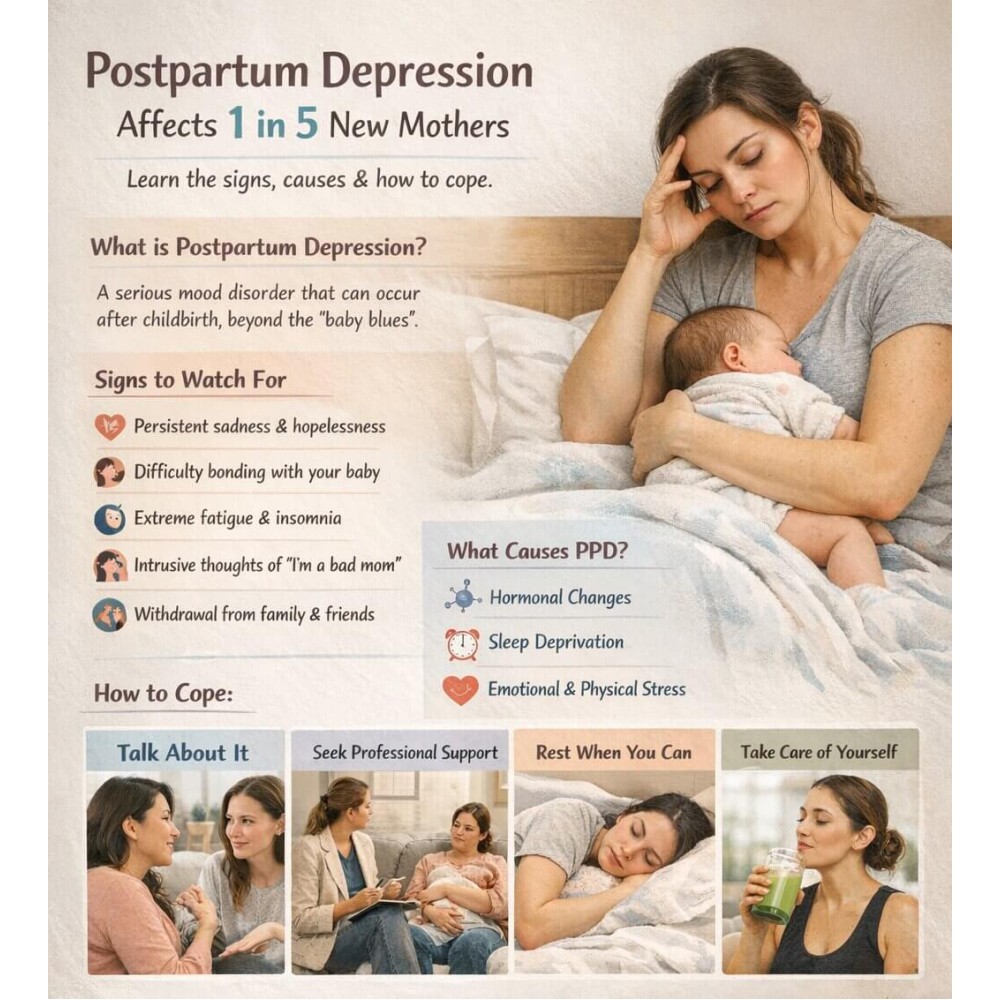
Postpartum Depression in Moms: What It Is and How to Cope
Postpartum depression affects 1 in 5 new mothers. Learn the signs, causes, and healthy coping strategies to support your mental wellness after childbirth.
Bringing a new life into the world is beautiful — but it’s also exhausting, emotional, and overwhelming. While most people expect new moms to feel joy, many experience something far more complicated: postpartum depression (PPD).
What is Postpartum Depression?
Postpartum depression is a mood disorder that affects women after childbirth. It goes beyond the typical “baby blues” (mild sadness and mood swings that resolve within 2 weeks). PPD is more intense, longer-lasting, and can significantly impact a mother’s ability to care for herself and her baby.
Signs to Watch Out For
- Persistent sadness, emptiness, or hopelessness
- Difficulty bonding with your baby
- Extreme fatigue or inability to sleep even when the baby sleeps
- Loss of appetite or overeating
- Feeling like a “bad mother” or having intrusive thoughts
- Withdrawal from family and friends
- Anxiety or panic attacks
What Causes PPD?
PPD is triggered by a combination of factors — hormonal shifts after delivery, sleep deprivation, physical recovery from childbirth, and the emotional adjustment to a new identity as a mother. It is not a sign of weakness or failure.
How to Cope
Talk about it. Share how you feel with your partner, a trusted friend, or a healthcare provider. Silence makes PPD worse.
Seek professional support. Therapy (especially Cognitive Behavioural Therapy) and medication, if prescribed, are highly effective.
Rest when you can. Sleep deprivation amplifies emotional distress. Accept help with baby care so you can rest.
Take care of your body. Gentle walks, nutritious meals, and even a simple skincare routine can restore a sense of normalcy and self-worth.
You are not alone. Postpartum depression affects 1 in 5 new mothers. Recovery is possible with the right support.
At Kidzo Care, we believe that a healthy baby starts with a healthy, happy mama. Our gentle self-care range is designed for new mothers too — because you matter just as much.
To every new mom reading this: you are doing an incredible job.

How to Care for Your Baby’s Skin Through Every Season
From summer heat to winter dryness — learn how to protect your baby’s sensitive skin through every season with expert-approved tips.
Seasons change, and so do your baby’s skincare needs. The same routine that works in winter may cause prickly heat in summer. Here’s how to adapt your baby’s skincare through the year.
Summer Skincare for Babies
Heat and humidity increase the risk of heat rash, sunburn, and sweat-related irritation. Keep baths cool and short. Use a light, non-greasy moisturiser. Apply a mineral sunscreen (SPF 30+) on exposed skin. Dress your baby in loose, breathable cotton clothing and avoid outings during peak sun hours (11am–4pm).
Monsoon Skincare
Humidity and dampness during the rainy season can trigger fungal infections and diaper rashes. Change diapers more frequently. Keep skin folds (neck, armpits, thighs) dry and clean. Use an antifungal baby powder if recommended by your paediatrician.
Winter Skincare for Babies
Cold, dry air dehydrates your baby’s skin quickly. Use a richer, emollient-based moisturiser immediately after baths. Avoid long hot baths as they worsen dryness. Keep the home moderately humidified and dress your baby in soft, non-scratchy fabrics to avoid irritation.
Year-Round Essentials
Regardless of season, always keep these three things constant: a gentle cleanser, a good moisturiser, and sun protection. Kidzo Care’s season-smart skincare range is designed to protect your baby’s skin all year round.
Because your baby’s skin shouldn’t have to suffer through any season.
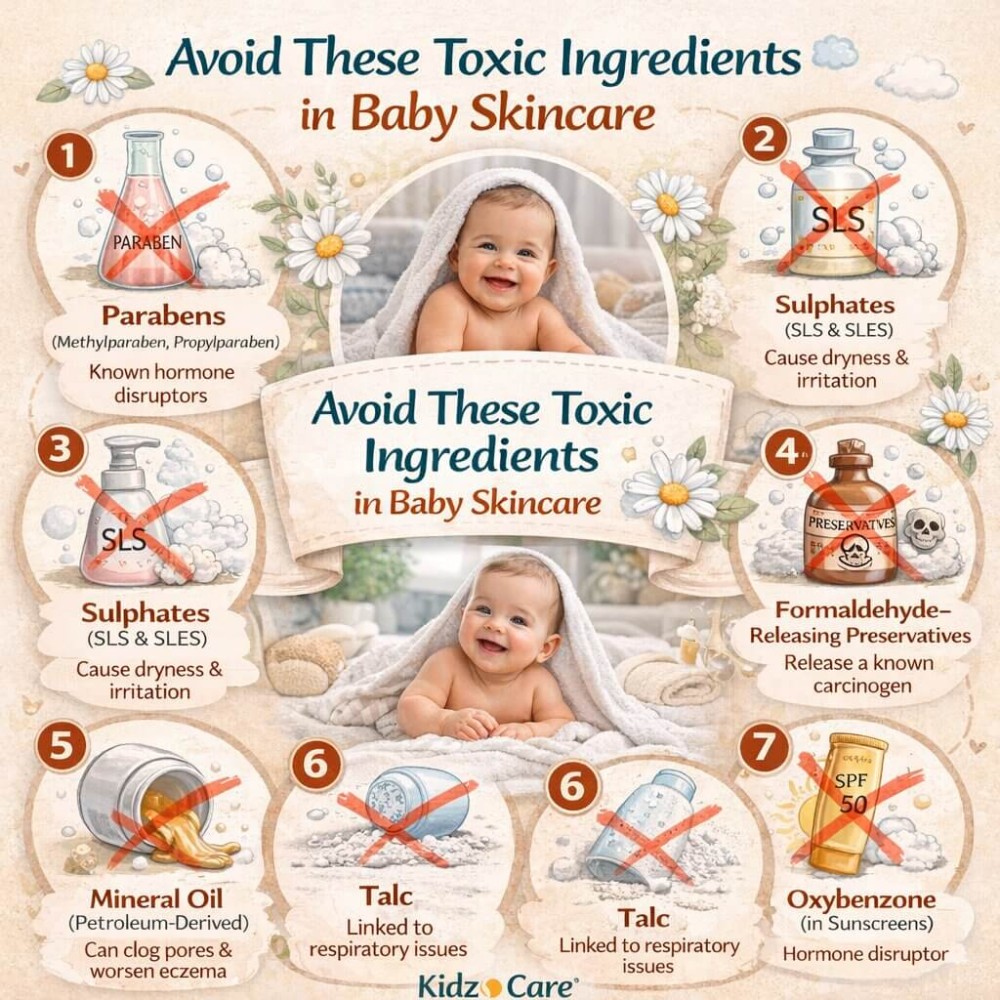
7 Harmful Ingredients to Avoid in Baby Skincare Products
Protect your baby’s skin! Learn which toxic ingredients to avoid in baby skincare — parabens, sulphates, fragrances, and more.
Reading a baby product label can feel like decoding a science paper. But knowing which ingredients to avoid is one of the most important things you can do as a parent. Here are 7 harmful ingredients commonly found in baby skincare products — and why you should steer clear of them.
1. Parabens (Methylparaben, Propylparaben) Used as preservatives, parabens are known hormone disruptors. Studies suggest they can interfere with the body’s endocrine system — especially concerning for developing babies.
2. Sulphates (SLS & SLES) Sodium Lauryl Sulphate and its cousin SLES are foaming agents that can strip natural oils from your baby’s skin, causing dryness, irritation, and rashes.
3. Artificial Fragrances “Fragrance” on a label can mean a cocktail of hundreds of chemicals, many of which are allergens. Babies have sensitive skin — fragrance-free is always the safer choice.
4. Formaldehyde-Releasing Preservatives Ingredients like DMDM Hydantoin slowly release formaldehyde, a known carcinogen. These are found in some baby shampoos and washes.
5. Mineral Oil (Petroleum-Derived) While it creates a moisture barrier, petroleum-derived mineral oil can clog pores and prevent the skin from breathing, worsening conditions like eczema.
6. Talc Baby powder made with talc has been linked to respiratory issues when inhaled. Choose cornstarch-based alternatives instead.
7. Oxybenzone (in Sunscreens) This chemical UV filter is easily absorbed through the skin and is a known hormone disruptor. For babies and kids, always opt for mineral sunscreens with zinc oxide or titanium dioxide.
At Kidzo Care, every product is formulated without these harmful ingredients — because your baby deserves nothing but the best.
Clean beauty for the tiniest humans. That’s our promise
-1000x1000.jpg "A Simple Skincare Routine for Kids: Age-by-Age Guide")
A Simple Skincare Routine for Kids: Age-by-Age Guide
Learn the ideal kids’ skincare routine for every age group — from newborns to tweens. Simple, effective, and dermatologist-friendly tips.
Children’s skin goes through many changes as they grow. What works for a newborn won’t work for a 10-year-old. Here’s a simple age-by-age guide to building a healthy skincare routine for your child.
Newborns to 12 Months
At this stage, keep it minimal. Use a gentle, fragrance-free baby wash, a mild moisturiser, and a diaper rash cream. Avoid baby powder (talc), which can be harmful when inhaled. Focus on keeping skin clean, moisturised, and protected from the elements.
Toddlers (1–3 Years)
Toddlers are on the move — exploring dirt, grass, and everything in between! Use a gentle foaming cleanser for the face and body, and a light moisturiser after baths. Sunscreen is a must for outdoor play, even on cloudy days.
Pre-Schoolers (3–6 Years)
By now, kids may start getting minor cuts, scrapes, or skin irritation from play. Introduce a soothing after-sun lotion for summer months and keep a gentle antiseptic cream handy. A fragrance-free body lotion used daily helps maintain skin hydration.
School-Age Kids (6–12 Years)
At this stage, sweat and environmental exposure increase. A mild face wash twice a day is beneficial. Continue with daily moisturiser and sunscreen. Keep an eye out for early signs of eczema or seasonal allergies on skin.
The Golden Rule for All Ages
Always read product labels. Choose skincare that is free of parabens, sulphates, artificial fragrances, and harsh chemicals. Kidzo Care’s age-specific formulations make it easy for parents to pick the right product at every stage.
Start the right skincare habits early — healthy skin begins in childhood.
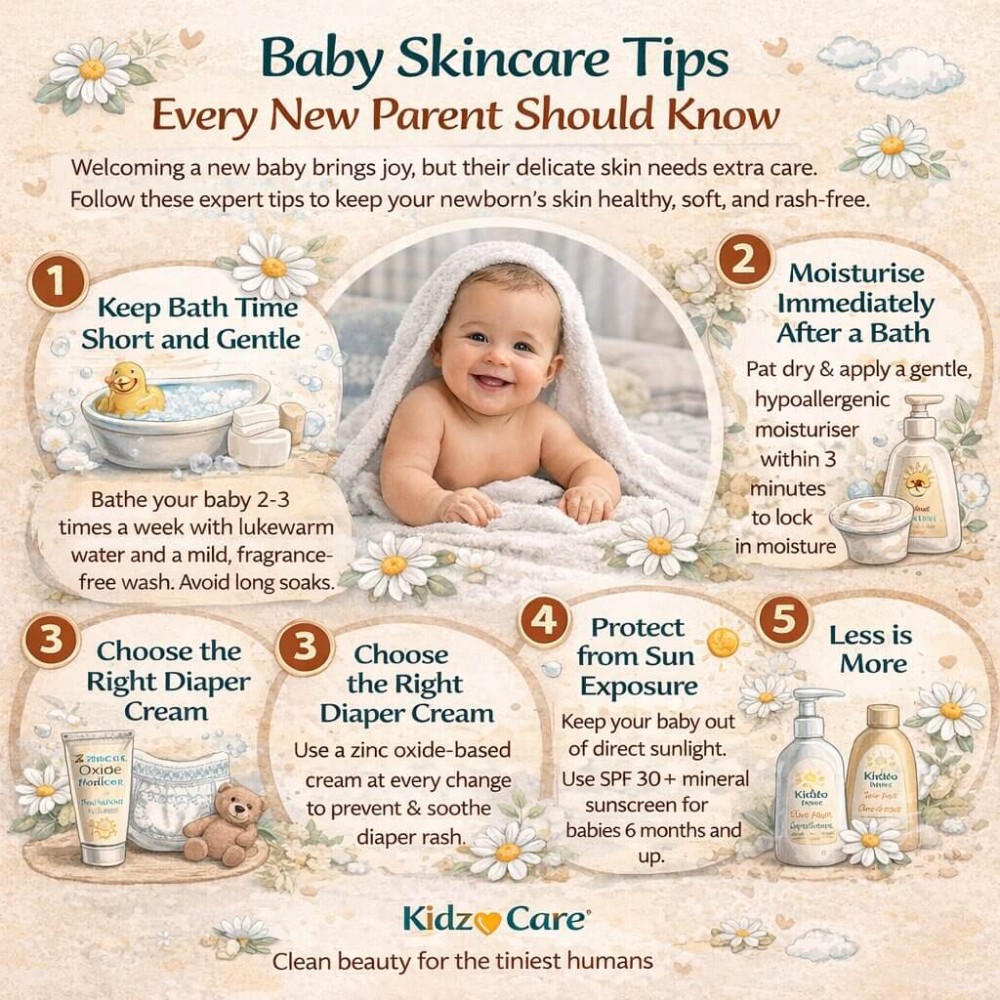
Baby Skincare Tips Every New Parent Should Know
Discover essential baby skincare tips to keep your newborn’s delicate skin healthy, soft, and rash-free. Expert-backed advice for new parents.
Welcoming a new baby is one of life’s most joyful moments — but caring for their skin can feel overwhelming. Babies are born with incredibly delicate skin that is thinner and more sensitive than adult skin, making it prone to dryness, rashes, and irritation. The good news? A few simple habits can go a long way.
Keep Bath Time Short and Gentle
Bathing your baby 2–3 times a week is enough. Use lukewarm water and a mild, fragrance-free baby wash. Avoid long soaks as they can strip away natural oils from your baby’s skin.
Moisturise Immediately After a Bath
Pat your baby’s skin dry — never rub — and apply a gentle, hypoallergenic moisturiser within 3 minutes of bathing. This locks in moisture and keeps the skin barrier strong.
Choose the Right Diaper Cream
Diaper rash is one of the most common skin issues in babies. Use a zinc oxide-based cream at every diaper change to protect and soothe. Always keep the diaper area clean and dry.
Protect from Sun Exposure
Babies under 6 months should be kept out of direct sunlight. For older babies and kids, apply a mineral-based sunscreen with SPF 30 or higher before outdoor play.
Less is More
Avoid using multiple products on your baby’s skin. Stick to a simple routine with clean-label, dermatologist-tested products — like those from Kidzo Care — formulated specially for your little one’s needs.
Kidzo Care products are crafted with love and science — gentle on baby skin, tough on impurities.